Case Study
Redesigning a Main Menu Across Five Teams
What happens when a AAA game’s main menu competes with its own visuals instead of showcasing them?
Main Menu Redesign
Cinematic UI Direction
Dynamic Navigation System
Cross-Functional Leadership
Production Tooling
5
teams aligned
5
teams aligned
8 mo
end-to-end execution
8 mo
end-to-end execution
3+
modes reused lighting system
3+
modes reused lighting system
0
code required for seasonal refresh
0
code required for seasonal refresh
My Role
Design Lead, UI/UX
Timeline
8 months (Oct 2024 – Jun 2025)
Team
Environment, Lighting, Characters, Engineering, UI/UX
Problem
Previous NBA 2K main menus prioritized visual complexity over clarity. Layered textures and busy graphics made it harder for users to quickly navigate to their preferred game mode. As the product matured, the UI wasn't keeping pace with the quality of the game's core asset: photorealistic player models.
We saw an opportunity to strip back the noise and let the product's strongest feature take center stage.
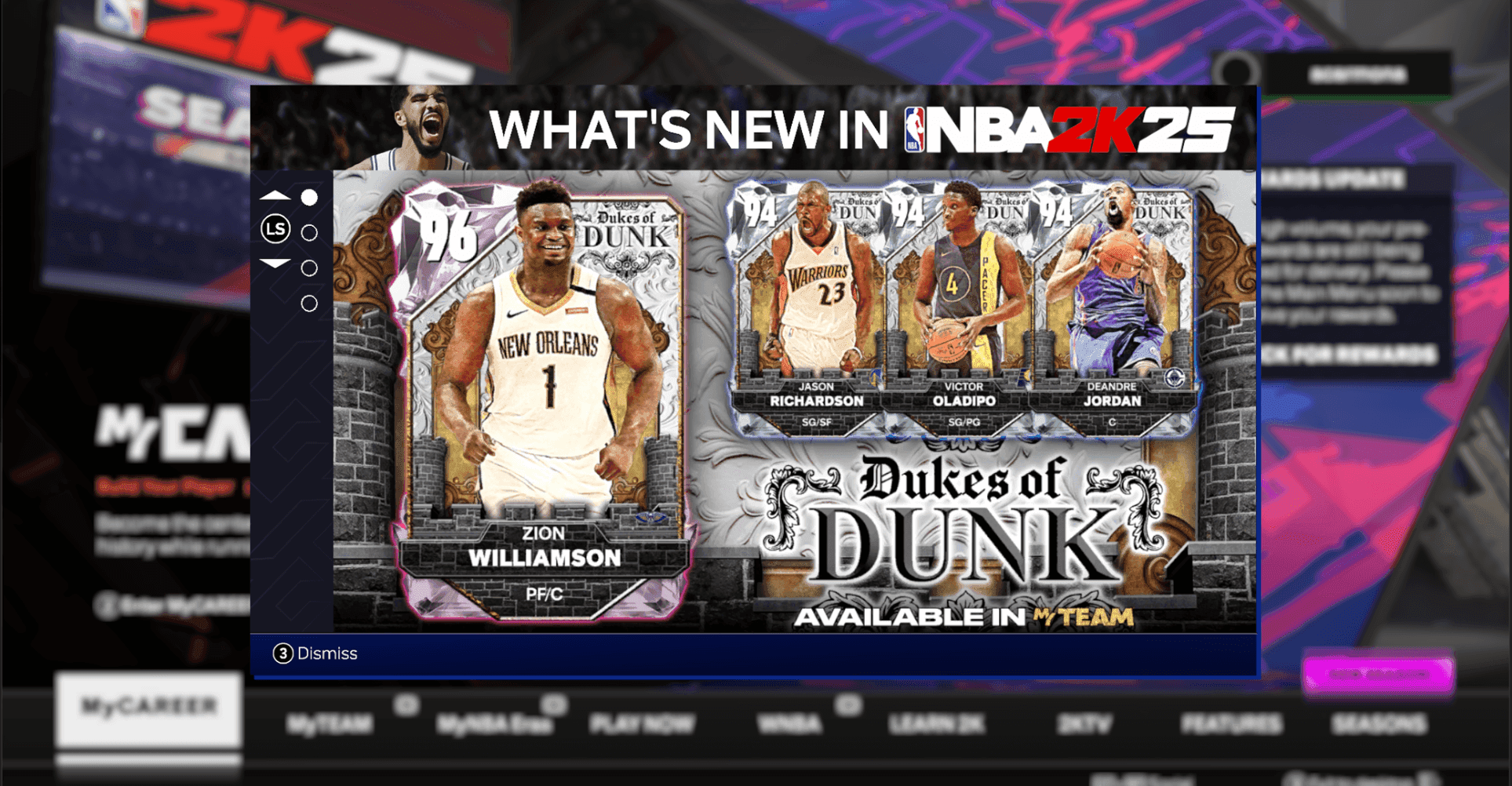
Previous year main menu

Previous three main menus
Problem
Previous NBA 2K main menus prioritized visual complexity over clarity. Layered textures and busy graphics made it harder for users to quickly navigate to their preferred game mode. As the product matured, the UI wasn't keeping pace with the quality of the game's core asset: photorealistic player models.
We saw an opportunity to strip back the noise and let the product's strongest feature take center stage.
Previous year main menu
Previous three main menus
Process
Exploration
I explored multiple layout directions, from grid-based hubs to carousel formats. The winning concept was a dynamic text list where items reorder based on content priority, giving us flexibility for seasonal updates without redesigning the menu each cycle.
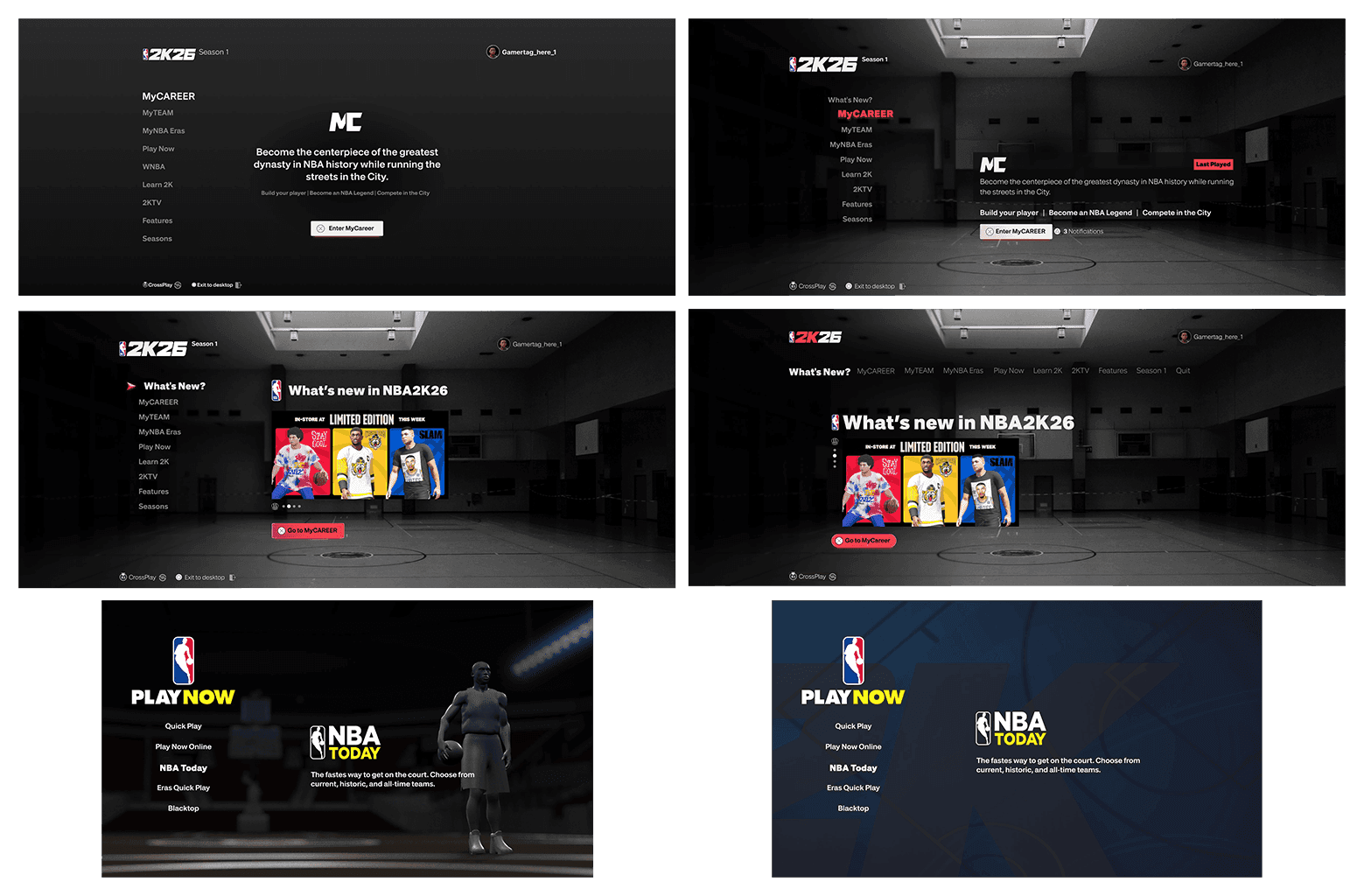
Early Explorations
Concept Direction
Drawing on my love for photography, I pitched a cinematic approach: slow motion shots of individual players performing signature moves, lit dramatically in a darkened arena. The UI would stay minimal, letting the visuals do the work.
Leadership approved the concept. Now we had to build it.
Cross-Functional Execution
This required coordinating five teams: Environment (arena scene), Lighting (cinematic mood), Characters (max fidelity models), Engineering (camera systems, transitions, effects), and my UI/UX team.
I created a milestone roadmap, ran kickoff meetings, and embedded with each team to keep the vision consistent. Worked especially close with engineering to build internal tools that would let us update player animations without full dev cycles.
Process
Exploration
I explored multiple layout directions, from grid-based hubs to carousel formats. The winning concept was a dynamic text list where items reorder based on content priority, giving us flexibility for seasonal updates without redesigning the menu each cycle.
Early Explorations
Concept Direction
Drawing on my love for photography, I pitched a cinematic approach: slow motion shots of individual players performing signature moves, lit dramatically in a darkened arena. The UI would stay minimal, letting the visuals do the work.
Leadership approved the concept. Now we had to build it.
Cross-Functional Execution
This required coordinating five teams: Environment (arena scene), Lighting (cinematic mood), Characters (max fidelity models), Engineering (camera systems, transitions, effects), and my UI/UX team.
I created a milestone roadmap, ran kickoff meetings, and embedded with each team to keep the vision consistent. Worked especially close with engineering to build internal tools that would let us update player animations without full dev cycles.
Solution
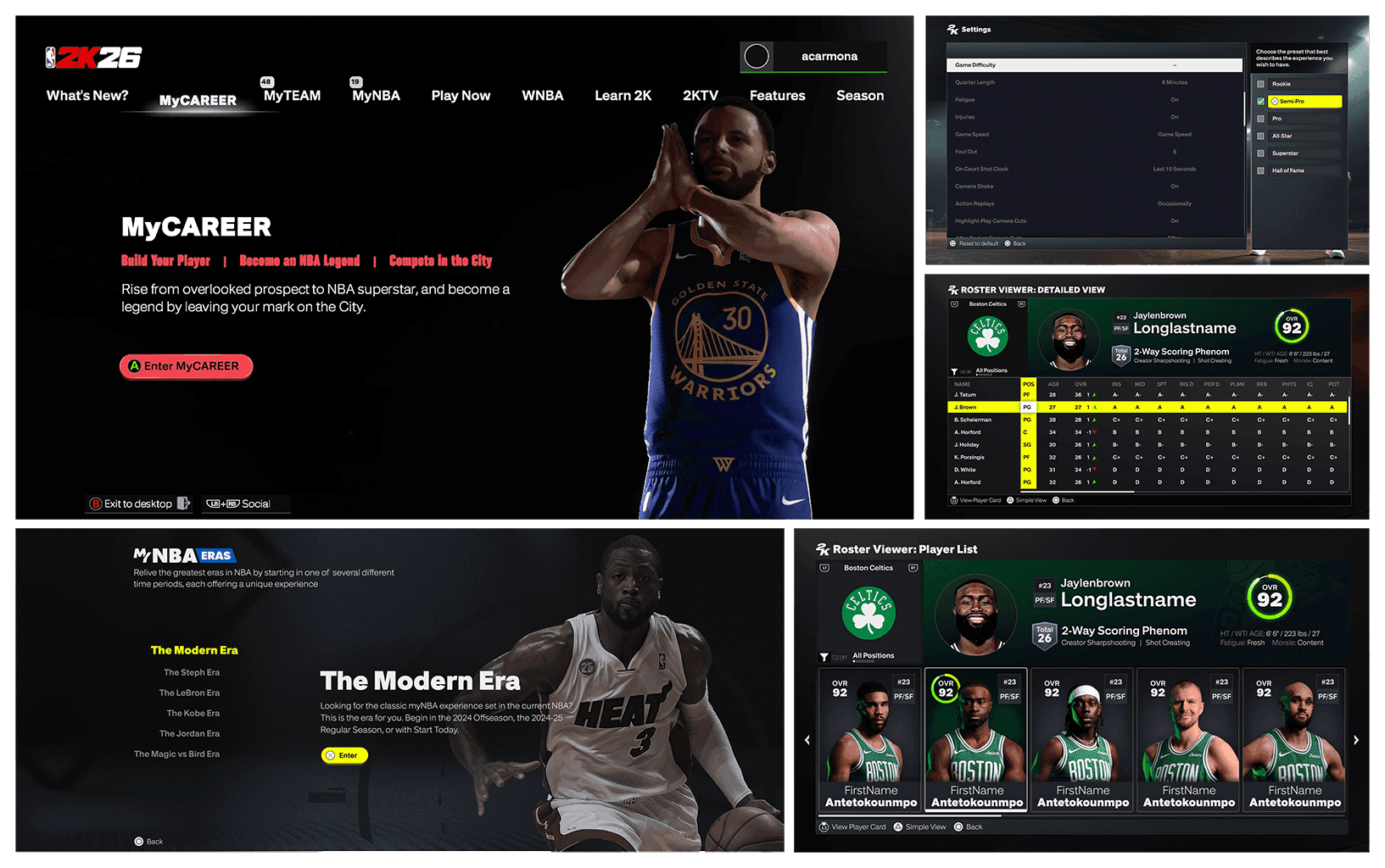
A redesigned main menu featuring:
Dynamic Navigation
Menu items reorder automatically based on content priority and seasonal relevance.
Cinematic Presentation
Slow motion signature moves, dramatic arena lighting, and controlled camera transitions.
Clarity First UI
Reduced textures and visual noise to create a faster, more direct path to game modes.
Reusable Production Tools
Built internal camera tooling that enabled seasonal updates without requiring new code.
Shipped product
Solution
A redesigned main menu featuring:
Dynamic Navigation
Menu items reorder automatically based on content priority and seasonal relevance.
Cinematic Presentation
Slow motion signature moves, dramatic arena lighting, and controlled camera transitions.
Clarity First UI
Reduced textures and visual noise to create a faster, more direct path to game modes.
Reusable Production Tools
Built internal camera tooling that enabled seasonal updates without requiring new code.
Shipped product
Impact
This menu set a new visual standard for the entire product. Leadership flagged this as the quality bar for the release. The arena lighting setup got reused in three other modes. On the production side, the camera tools we built with engineering let us refresh player showcases without touching code, which meant marketing could request seasonal updates without blowing up the schedule.
Impact
This menu set a new visual standard for the entire product. Leadership flagged this as the quality bar for the release. The arena lighting setup got reused in three other modes. On the production side, the camera tools we built with engineering let us refresh player showcases without touching code, which meant marketing could request seasonal updates without blowing up the schedule.
© 2026 by Albert Carmona
© 2026 by Albert Carmona
© 2026 by Albert Carmona